Lower Street
Lower Street
Streets
DONJA ULICA WAS BUILT SIMULTANEOUSLY WITH THE DEVELOPMENT OF THE MARITIME ACTIVITY
Donja ulica was stretching next to the emporion, the trading centre of the town and was provided with the port-related facilities replaced by the residential ones since the Middle Ages. Donja ulica was built owing to the expansion of the warehouse towards the seafront in the 14th and 15th century on the site of the former shoreline. The sea embankment was turned into the storage space for the enlarged Town of Rab.
MARINELLIS PALACE IN SREDNJA ULICA WAS EASILY ACCESSED BY BOAT
The basement rooms of the Marinellis Palace in Srednja ulica, where the shipyard was situated, was easily accessed by sea at that time.
NIMIRA PALACE WITH THE PRESERVED ATRIUM AND THE GATE DATING BACK TO THE LATE GOTHIC PERIOD
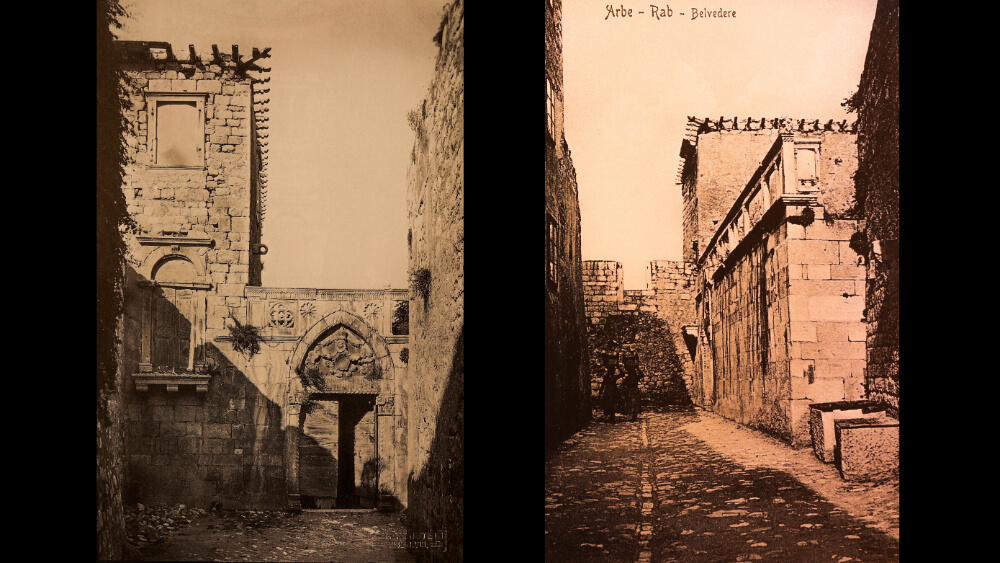
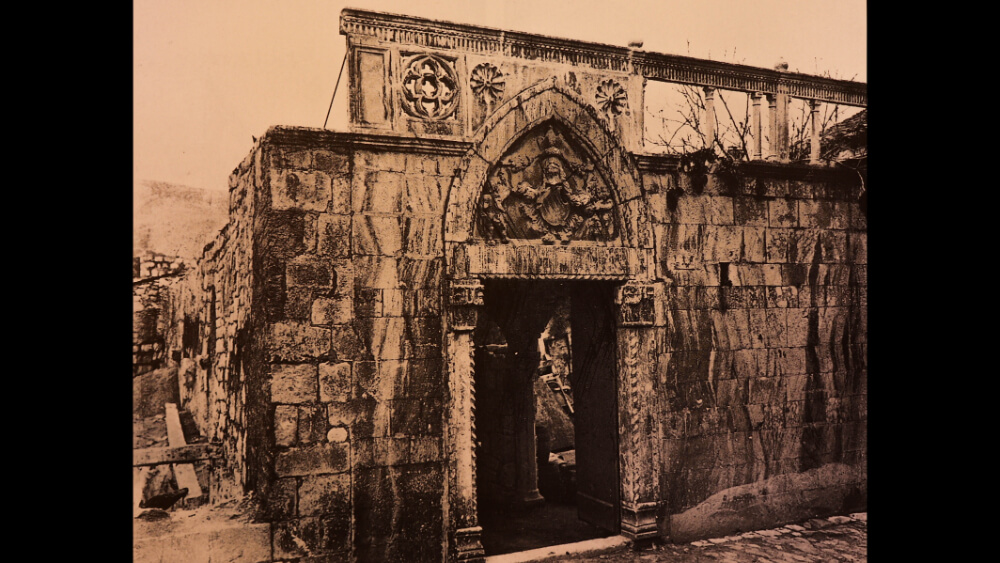
The most significant residential building of this area is the Nimira Palace on the western side of the street, with the preserved symmetrical atrium and a monumental gate dating back to the Late Gothic period. In its proximity, at the corner of Srednja ulica and a small side street, the Church of St. Anthony from Padua is located, built in the 17th c. as a vow of F. Brazza, its donor. Above the wooden altar there is an antependium with multi-coloured marble intarsia representing Virgin Mary with St. Francis, St. Anthony and the portrait of the donor.
KNEŽEV DVOR (DUKE'S PALACE) – THE SEAT OF THE POLITICAL POWER
Heading southeast, yu will see a large square with the Duke's Palace residential complex, dating back to the 12th c., with recent upgrades and reconstructions. As in the past, Duke's Palace is still the seat of the political power and the head office of the Mayor of Rab and the local parliament.
PLATEA GOSPI – THE MAIN TOWN PUBLIC SPACE AND THE CENTRE OF THE TOWN'S PUBLIC LIFE
This is where the entrance to the town from the shoreline under the vaulted ground floor of the town watchtower is located, merging into Srednja ulica at the small central square where the Municipal Lodge (Loggia) was built in 1508. There was a granary on the site where foreign merchants used to live, trade and store their goods, as well as the Church of St. Nicholas dating back to the Late Romanesque period, originally named the Church of the Holy Spirit, reconstructed in the 15th century. This small square named Platea Gospi (the square dedicated to Virgin Mary), was the town's public space and the main town centre throbbing with life.