The Church of St. Justine
The Church of St. Justine
Churches
THE CHURCH WAS ERECTED ON THE OCCASION OF THE VICTORY OF THE HOLY LEAGUE OVER THE OTTOMAN EMPIRE IN A NAVAL BATTLE
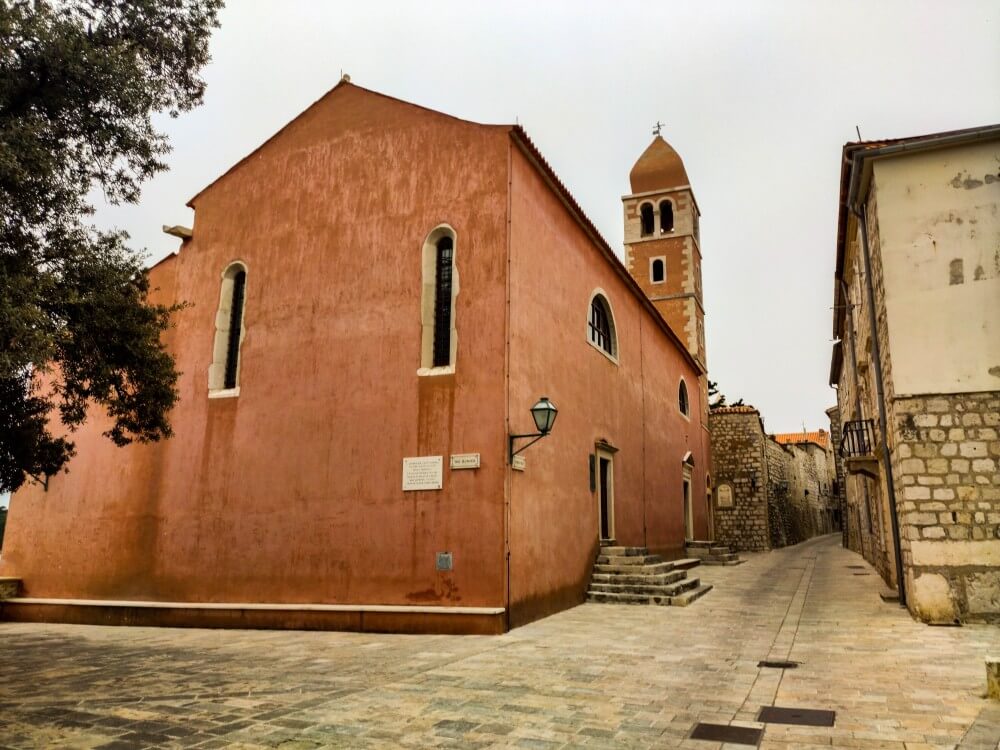
It was built together with the remains of the early Christian Church of St. Thomas (Cro. Crkva Sv. Tome), on the occasion of a successfully won naval battle against the Ottoman fleet in the Greek municipality of Lepanto in 1571 (on St. Justine's Day), in which the population of Rab played a major role.
THE CITIZENS OF RAB BUILT A MONASTERY FOR BENEDICTINE COMMONERS
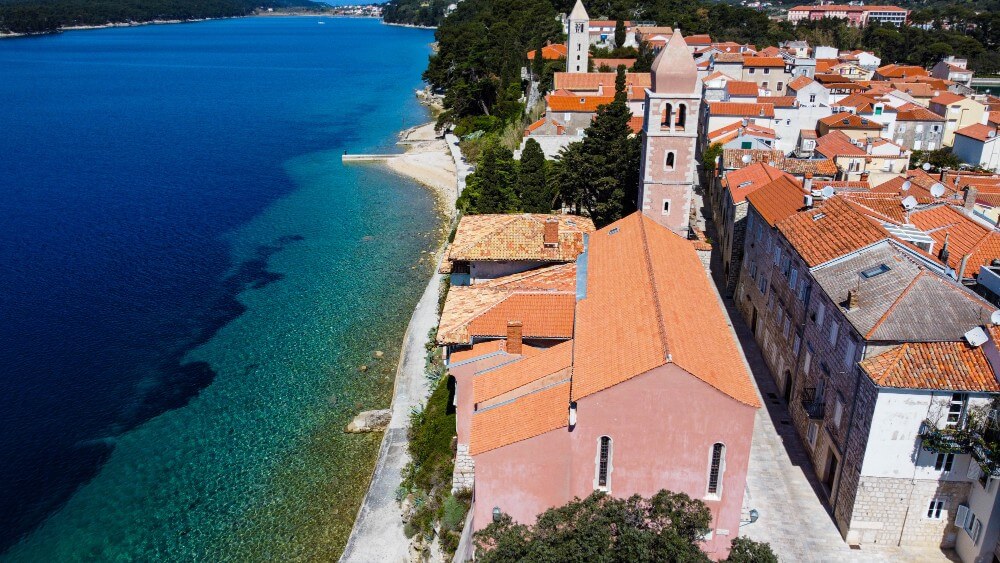
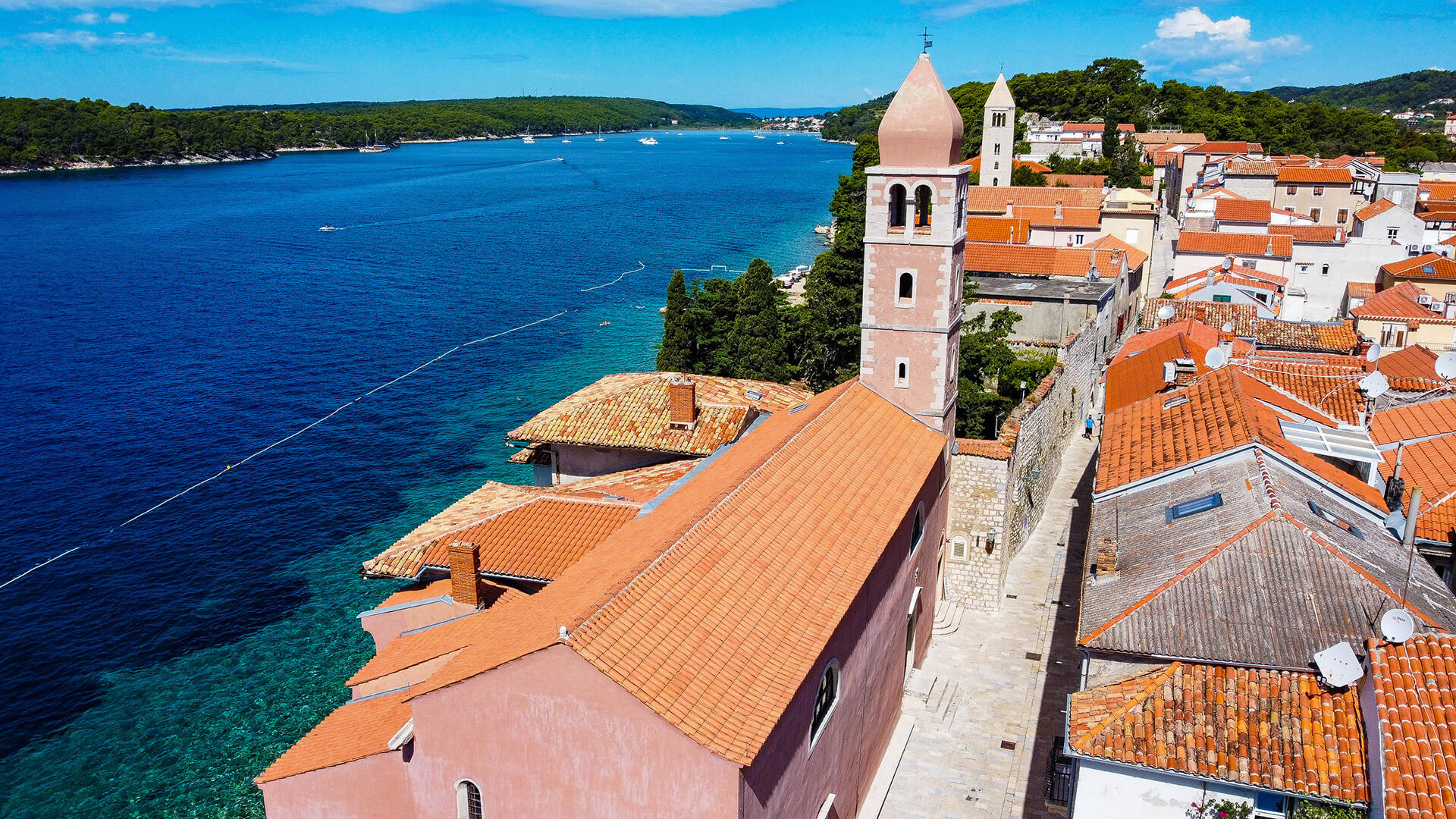
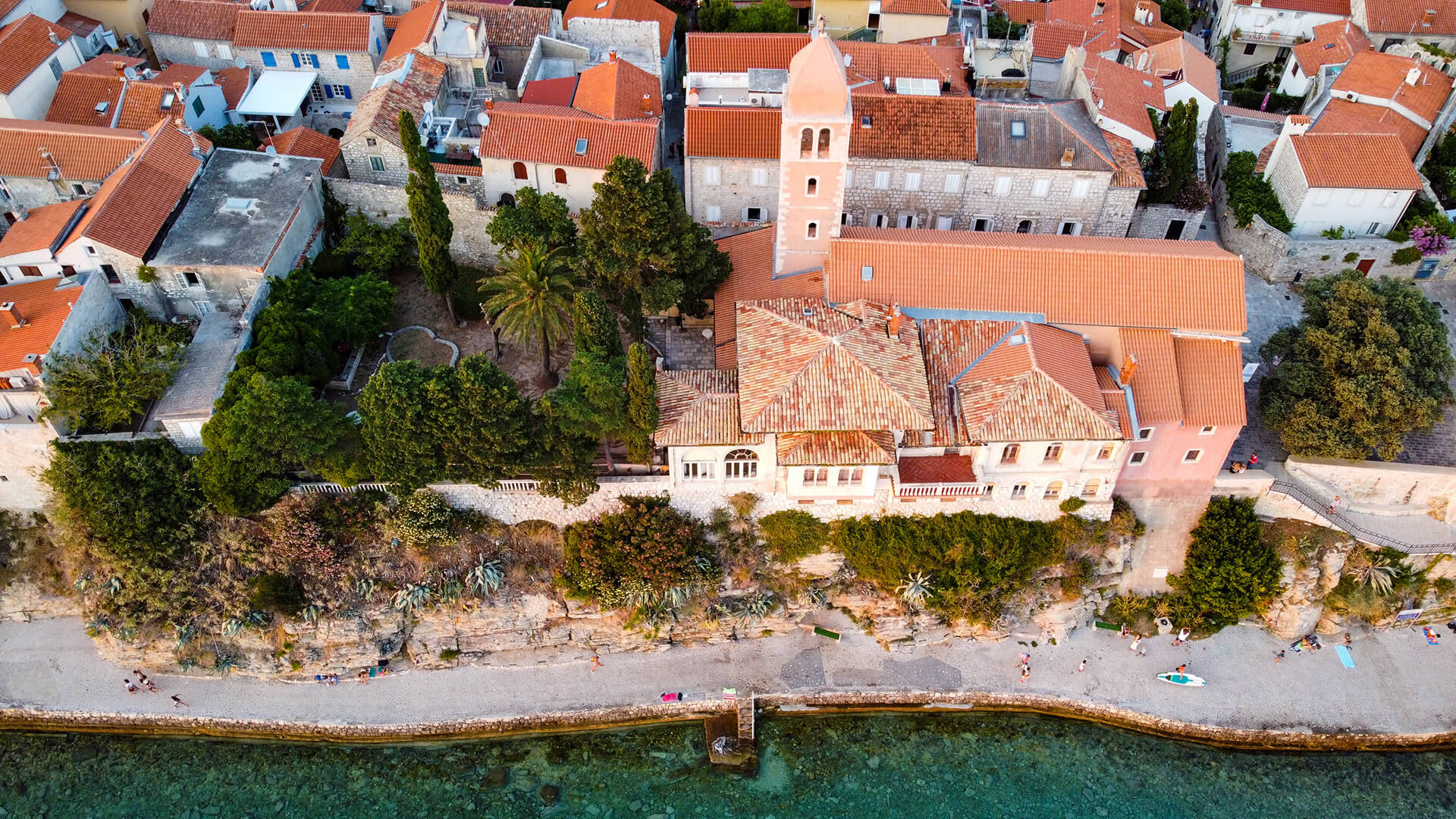
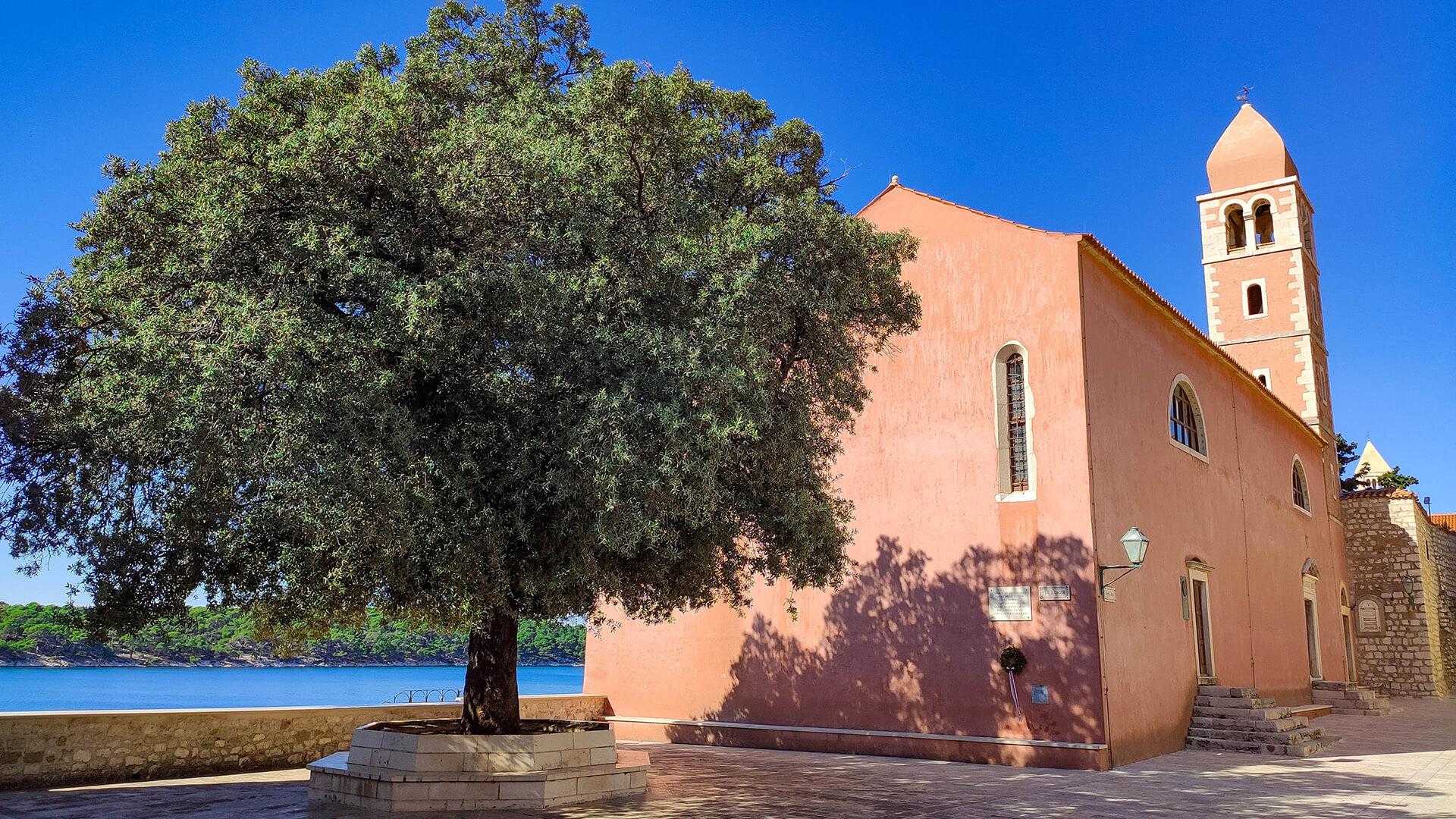
The approval of the construction of the monastery for the Benedictine commoners with the Church of St. Justine was obtained by the citizens of Rab in 1574. The church was built as a simple one-nave building with a rectangular sanctuary one step higher than the floor of the church. The choir area on the western side is supported by the pillars with proto-Romanesque capitals dating bac t the 11th century, the remains of the previous Church of St. Thomas, with its windows dating back to the 5th century left visible on the southern wall of the church during its reconstruction. The present appearance of the church originated in the 18th century, when plaster decorations were placed on the ceiling and large crescent-shaped windows were installed.
IN 1808, NAPOLEON CLOSED THE MONASTERY
The monastery was closed during the reign of Napoleon, at the beginning of the 19th century or, more precisely, in 1808, and Benedictine nuns moved to the Benedictine monastery of St. Andrew (originally built for the noblewomen of Rab). After it was abandoned, at the site of the Monastery of St. Justine the Villa Antonieta was built in a rather inappropriate form.
TODAY THE CHURCH HOSTS THE PERMANENT EXHIBITION OF THE VALUABLE SACRAL ART
For so many year the church was closed and due to its poor condition, the collection of sacral art of the former Rab diocese was taken to a safe place to be restored. The reconstruction of the church and its bell tower was one of the most extensive reconstruction projects in the area of protection and preservation of cultural heritage in Croatia, which lasted some ten years, and the church opened its door to visitors again in April of 2017. Today the church hosts the permanent exhibition of sacral art with valuable religious items and pieces of art dating back to the period from the 11th to the 18th century, originating from the Cathedral Treasury, the abandoned churches in Rab, such as the one of St. John the Evangelist, with several pieces of art borrowed from the female monastery of St. Anthony the Abbot.