Draga, a Shepherdess from Rab
Draga, a Shepherdess from Rab
Legends
The poem written by the Renaissance poet Juraj Baraković praising the beauty of Rab
JURAJ BARAKOVIĆ (1548 - 1628), THE CROATIAN RENAISSANCE POET BORN IN ZADAR
Draga, a shepherdess from Rab is an incompleted poem written by Juraj Baraković, a Renaissance poet born in Zadar, praising the sights of the Island of Rab, which consists of 3,000 verses of different metric forms. The poem was written in the form of a travel book, describing the author's travel across the Island of Rab, mentioning the local towns, villages, forests and bays which still exist. A street in Rab is named after Juraj Baraković.
DRAGA, A SHEPHERDESS FROM RAB
According to the legend described by Juraj Baraković, a young man named Kalifront was herding sheep with Barbat (a town on the Island of Rab, existing today), who had a daughter named Draga. She was a shepherdess.
KALIFRONT'S UNRESTRAINED LOVE
When Kalifront saw her standing alone on the meadow, he passionately fell in love with her. Despite trying to resist his passion due to his friendship with her father, Kalifront came at her.
DRAGA MADE A VOW OF CHASTITY TO THE GODDESS DIANA
Draga rejected Kalifront because her mother made her take a vow of chastity to the Goddess Diana. As she made a vow of chastity, she didn't want to lose her honour and integrity, so she had to run away from him because of his violent assault. Kalifront was trying to persuade her to love him back, to no avail, belittling the seriousness of the vow given to Diana and went after her.
JAMINA – AN INEXHAUSTIBLE WATER SPRING
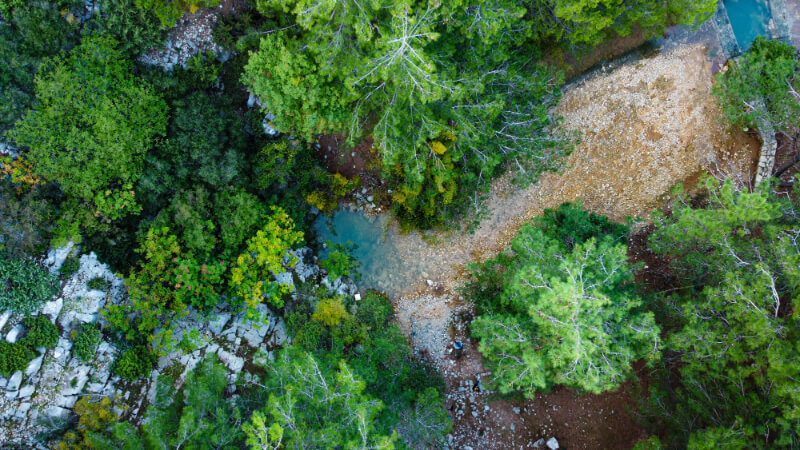
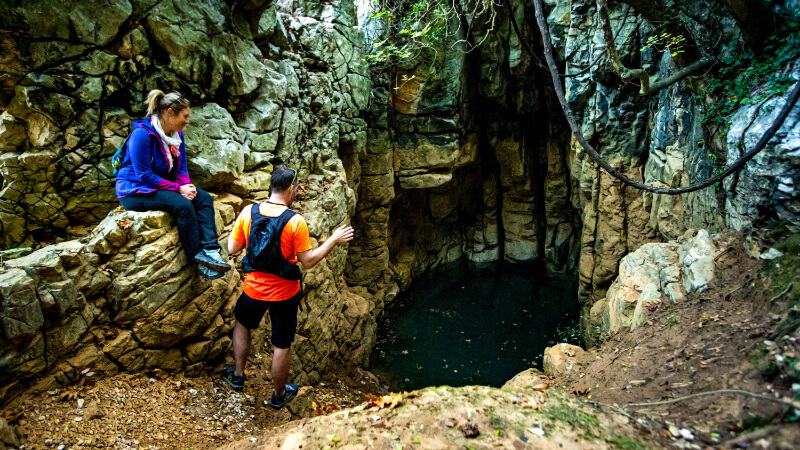
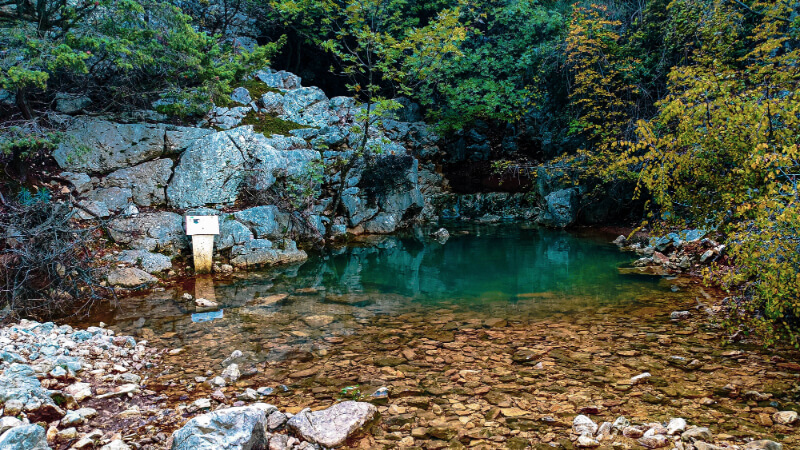
He caught up with Draga i front of the Jamina cave close to Lopar. The girl cried out for help and prayed to Diana to save her. The Goddess Diana heard her cry for help and turned the shepherdess Draga into a statue made of stone, with her tears forming a water spring.
GODS CONDEMNED KALIFRONT AND HE HAD TO FEED ON BERRIES
Kalifront was condemned by gods to live until the dead resurrect, until the Draga water spring dies up, and he had to visit the spring every midday and every midnight. Kalifront had to feed on wild berries and plant the trees until the water spring in the cave dries up. As the forest was becoming more dense, the hair on his skin became more stiff, so he started looking more like an animal than a man.
KALIFRONT MUST REMEMBER AND PASS ON THE HISTORY OF RAB THROUGH CENTURIES
According to Juraj Baraković, Kalifront had another task. he had to memorise the history of Rab and pass it on through centuries, as described in the poem written by Baraković:
"Stani, reče, ter me sliši,
a nemoj mi rič priteći,
zapamti ter zapiši, neka umiš drugim reći..."
THE MOST BEAUTIFUL AND THE MOST FORESTED PART OF THE ISLAND OF RAB WAS NAMED AFTER KALIFRONT
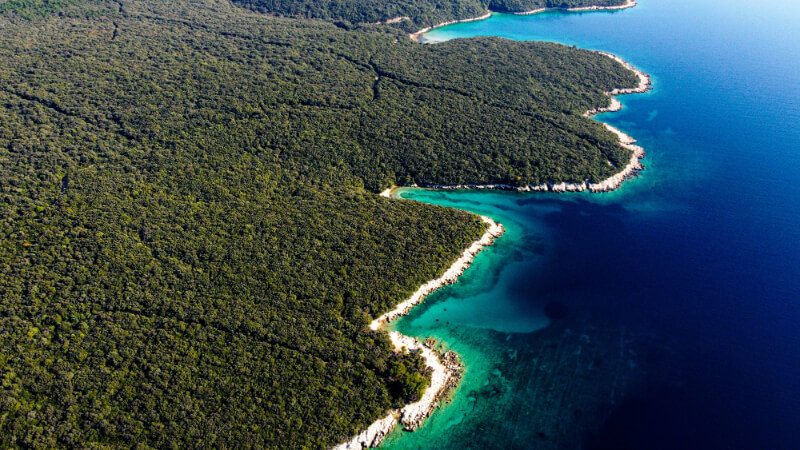
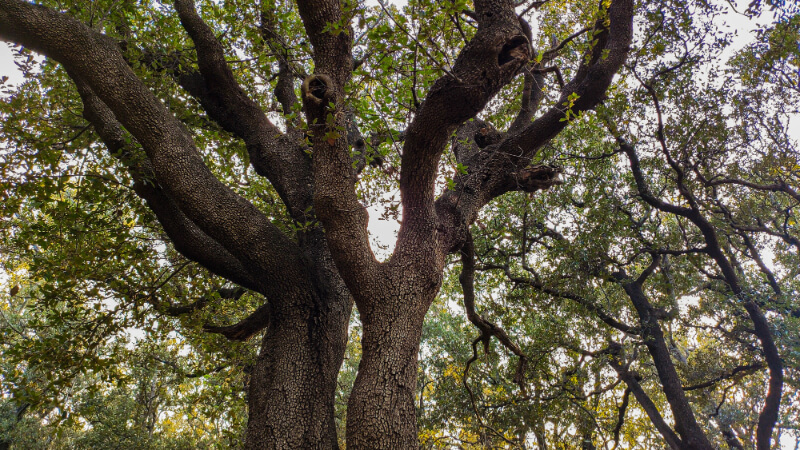
At the end he was transformed to the forest, merging with it. The largest forest on the Island of Rab and peninsula were named after Kalifront.
A FOUNTAIN WAS BUILT AT THE MAIN SQUARE IN RAB HONOURING THE POEM WRITTEN BY JURAJ BARAKOVIĆ
The fountain at the northern corner of the Square of St. Christpher (Sv. Kristofor) in Rab depicts the legend about the shepherdess Draga and the aggressive young man named Kalifront mentioned in the poem written by Juraj Baraković. The fountain was built in 1989, following the reconstruction of the square. It was designed by the academic sculptor Žarko Violić.