Duke’s Palace
Duke’s Palace
Public buildings
THE PALACE WAS THE SEAT OF THE POLITICAL POWER IN WHICH THE DUKE OF RAB LIVED
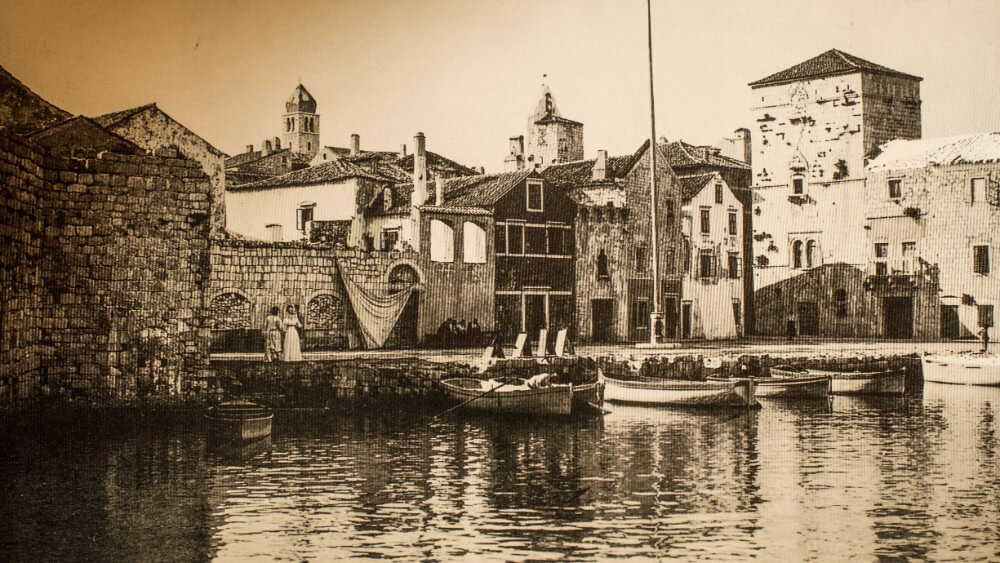
In the course of many centuries, the Duke's Palace was the most significant secular building in Rab. It was built since the establishment of the Rab commune for government and administration purposes, as well as for the purpose of work and residence of the Duke. It is situated in the northern part of the old town centre, at the Municipium Arba Square, originally the site of the town port. The sea embankment was built later and the largest free public space was created that was enclosed by a wall and protected by two towers on the side facing the sea. Its oldest part was its southern wing facing the main entrance in the direction of the narrow Donja ulica and the tower situated on the east side of it. Other parts were later added to the existing structures, including the eastern wing that was built first, followed by the construction of the western and northern part, forming the inner courtyard.
THE GREAT COUNCIL HELD ITS MEETINGS AT THE PALACE, AS WELL
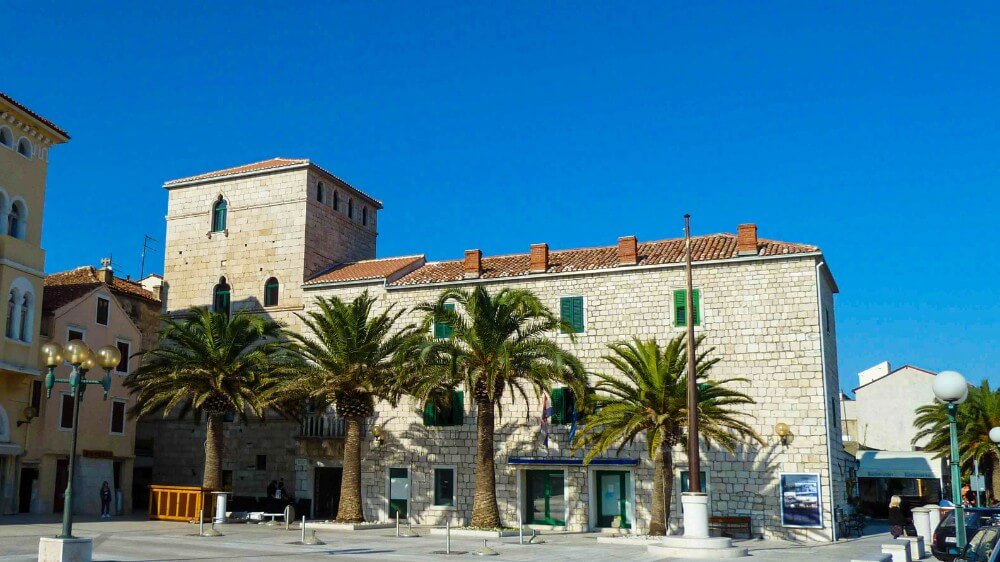
The elements of the most recent construction works can be recognised in the oblong southern wing of the palace, with a rectangular floor plan. The ground floor of the main entrance was built using rough cut stone, stacked in neat lines and the first floor is opened with two Romanesque biforas made from the pink breccia rock typical of the Island of Rab. That floor was the principal floor (piano nobile) with a banquet room where the Great Council met. The high tower, reconstructed as early as the first half of the 14th c., which probably had dungeons inside, dates back to the Middle Ages. During the first construction phase of the palace, the entrance gate was carved in the Romanesque and Gothic style, as well as the gate of the tower, with its construction completed by a pointy lunette, followed by the construction of the Gothic monoforas, placed in a way as to divide the older Romanesque-style dividing profile wreaths carved in breccia, indicating the original height of the tower floors.
THE OUTSTANDING SCULPTOR PETAR TROGIRANIN DECORATED THE DUKE'S PALACE
The floor of the eastern gate of the tower was opened by a monumental ornate bifora, decorated with the motifs of dents, dolphins and festoons by the sculptor Peter from the Town of Trogir, and a Renaissance balcony was constructed above the simply shaped gate reaching the internal courtyard. Balcony railing posts and three double gate consoles supporting the balcony with each one featuring a differently shaped lion head can be attributed to the same sculptor.
During the communal administration and at the beginning of the Venetian rule, the Duke's Palace was lavishly decorated and equipped with furniture and it must have presented the model for the construction of other palaces in town. Since the 16th c., with the weakening and impoverishment of the municipality of Rab, the palace became increasingly neglected and the performed works recorded in the archives featured mostly the repairs and temporary solutions. The particularly bad state is revealed in the records dating back to the end of the 18th and the beginning of the 19th c.
IT IS STILL THE SEAT OF THE POLITICAL POWER AND THE HEAD OFFICE OF THE MAYOR OF RAB
In the mid 20th c., construction works were initiated again and the palace was rebuilt according to its original external layout. Today, the palace is privately owned in part, partially serving for the public administration purposes, as the Mayor's head office and the headquarters of the City Council, as it did for centuries.