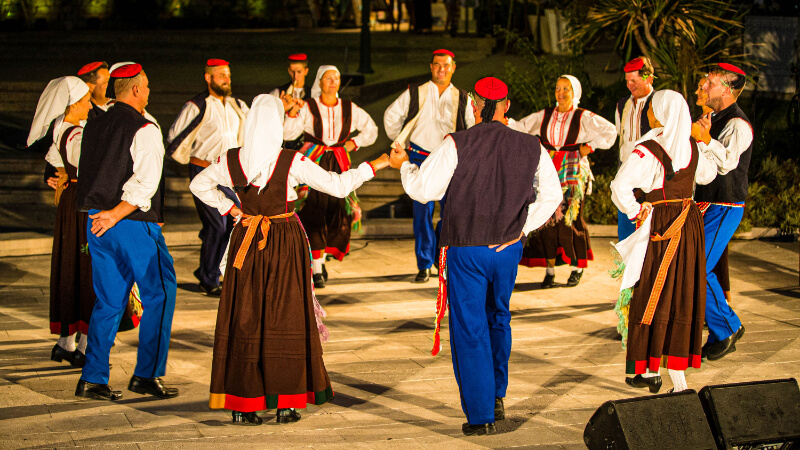
Rab Folk Dance
Rab Folk Dance
Cultural heritage and events
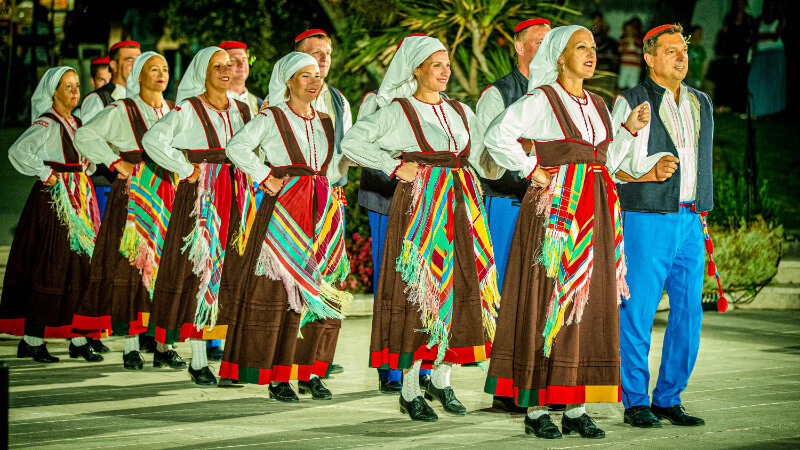
The Rapski tanac Folklore Society parade along the promenade could not go unnoticed.The hosts wearing the traditional folk costumes ad accompanied by the shrill sound of the traditional bagpipes (Cro. Loc. mih) would perform Rapski tanac – the local traditional dance.
RAPSKI TANAC OR RAPSKI PLES (RAB FOLK DANCE)
Rapski tanac is a specific folk dance from Rab that was danced in the course of history at big ceremonies, on major holidays, at the weddings and during carnivals. If ypu happen to be in the town and hear the shrill sounds of simple bagpipes (mih), consider yourself invited to take a walk along the old town centre, listening to the beats of Rapski tanac - the traditional Rab folk dance.
TANAC IS DANCED ACCOMPANIED BY THE BAGPIPES (MIH), A TRADITIONAL WIND INSTRUMENT
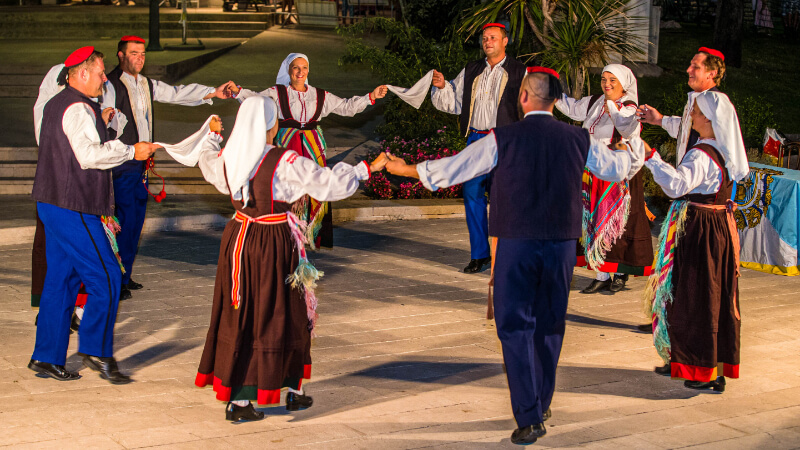
Tanac is danced accompanied with the bagpipes (mih), a traditional wind instrument, dances of the two folk societies and folk chants, in a way that the player is standing in the middle of the room, playing the instrument to the various dance figures, with a different tune with particular ornaments for the transition from one dance figure to the other. The person leading the dance or being the first one to dance would collect money for his group of men, he would then pay to the player or the host and would start dancing first. He would determine the rhythm of the dance and transition from one figure to another in a way to stump his right foot. After performing several dance figures, he would take a girl first, and the others would follow one by one. This part of the dance is called wedding (Cro. ženidba). When all of them 'got married', they would continue dancing to the music.
RAPSKI TANAC FOLKLORE SOCIETY DESERVES CREDIT FOR THE PRESERVATION OF TRADITION
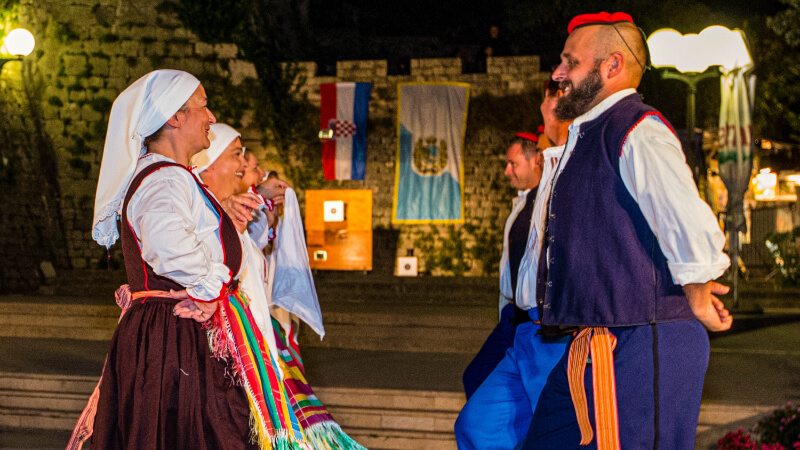
Unfortunately, today tanac is danced rarely and has practically disappeared from local celebrations and feasts. The culture of rapski tanac has been preserved by the Rapski tanac Folklore Society established in 1987, that has contributed significantly to the promotion of tourism on the Island of Rab, being a part of its cultural heritage. The folklore society members dance the original local tanac (dance), sing the old local songs and chants – kantanje (singing) of the Islad of Rab and wear two types of national costumes, including the modern ones and the ones which are over one hundred years old. Rapski tanac has got a rather rigid structure, with dance figures called: šutanje, šepanje, na vajer, kuntra, puž, mahlina, šija and merzinka. It is danced (tanca se) accompanied by the bagpipes (na mih). Rapski Tanac is danced wearing the traditional folk costume of the Island of Rab.
RAPSKI TANAC COMES BACK TO LIFE AT LOCAL WEDDINGS
In addition to the Rapski tanac Folklore Society which is the most important entity preserving this tradition, the local population that knows how to dance to the tanac and who dance it at weddings also contributes to its preservation. The promenade accompanied to the tunes of rapski tanac and the sound of the old bagpipes and the vivid voices of the singers can hardly leave anyone indifferent. What you can do is just dance to the simple steps of the dance ad become, at least for a moment, part of the tradition of the Island of Rab.
THE BAGPIPES (MIH) IS A TRADITIONAL WIND INSTRUMENT MADE OF SHEEP AND GOAT SKINS
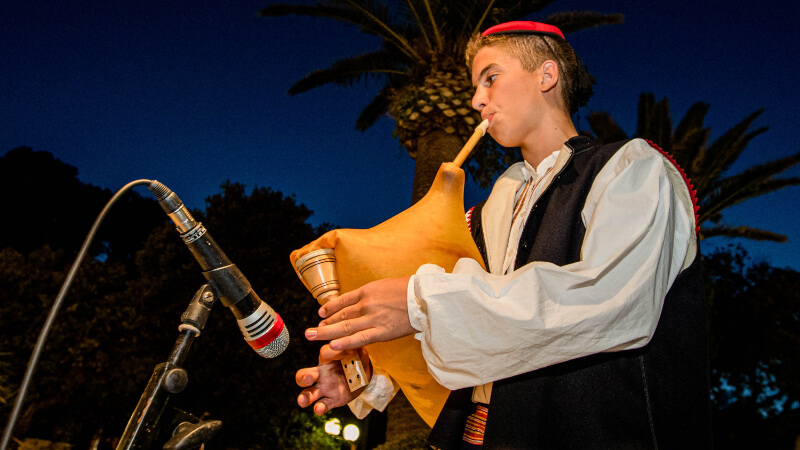
The traditional folk wind instrument named mih (a sort of simple bagpipes) consists of two bags made of goat of lamb skin with a chanter (Cro. prebirač) and tenor drone (Cro. kanelica) inserted inside. It is the instrument with two drones. The bagpipe player holds it under the armpit and controls the air pressure inside by applying the upper arm pressure on it which then enters the bagpipes through the drone and exits through the holes on the chanter. The player must press and close the remaining holes on the chanter to produce the specific sound. There are different techniques and modes of playing the bagpipes and each mih player has got his own playing style, as well as specific tunes and improvisations typical of him. Today, there are not many people on the island who can play this traditional instrument to which the locals used to dance.