The Monastery of St. Anthony the Abbot
The Monastery of St. Anthony the Abbot
Monasteries
THE MONASTERY AND THE CHURCH IN THE CORNER OF THE MILLENNIAL WALLS
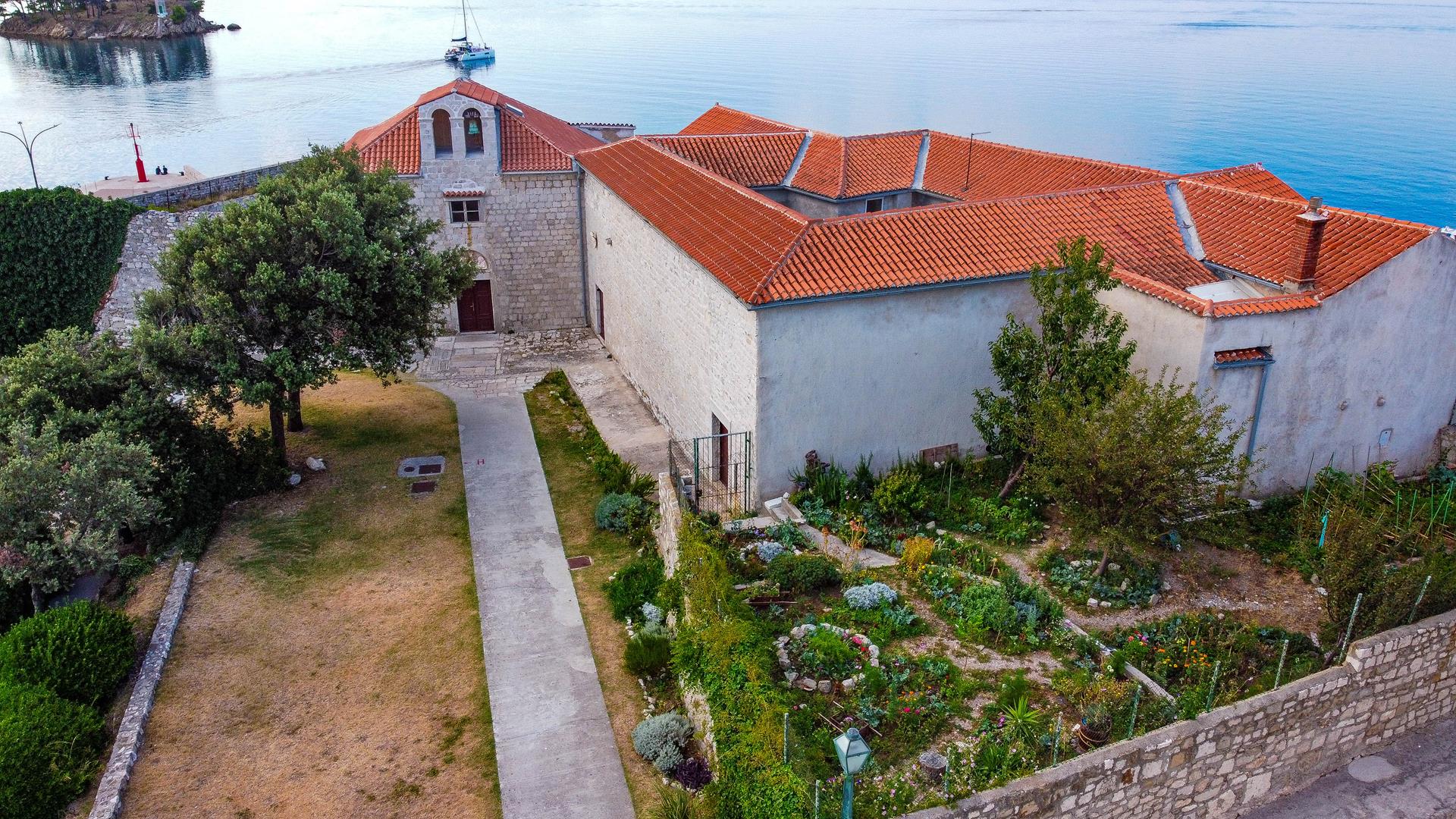
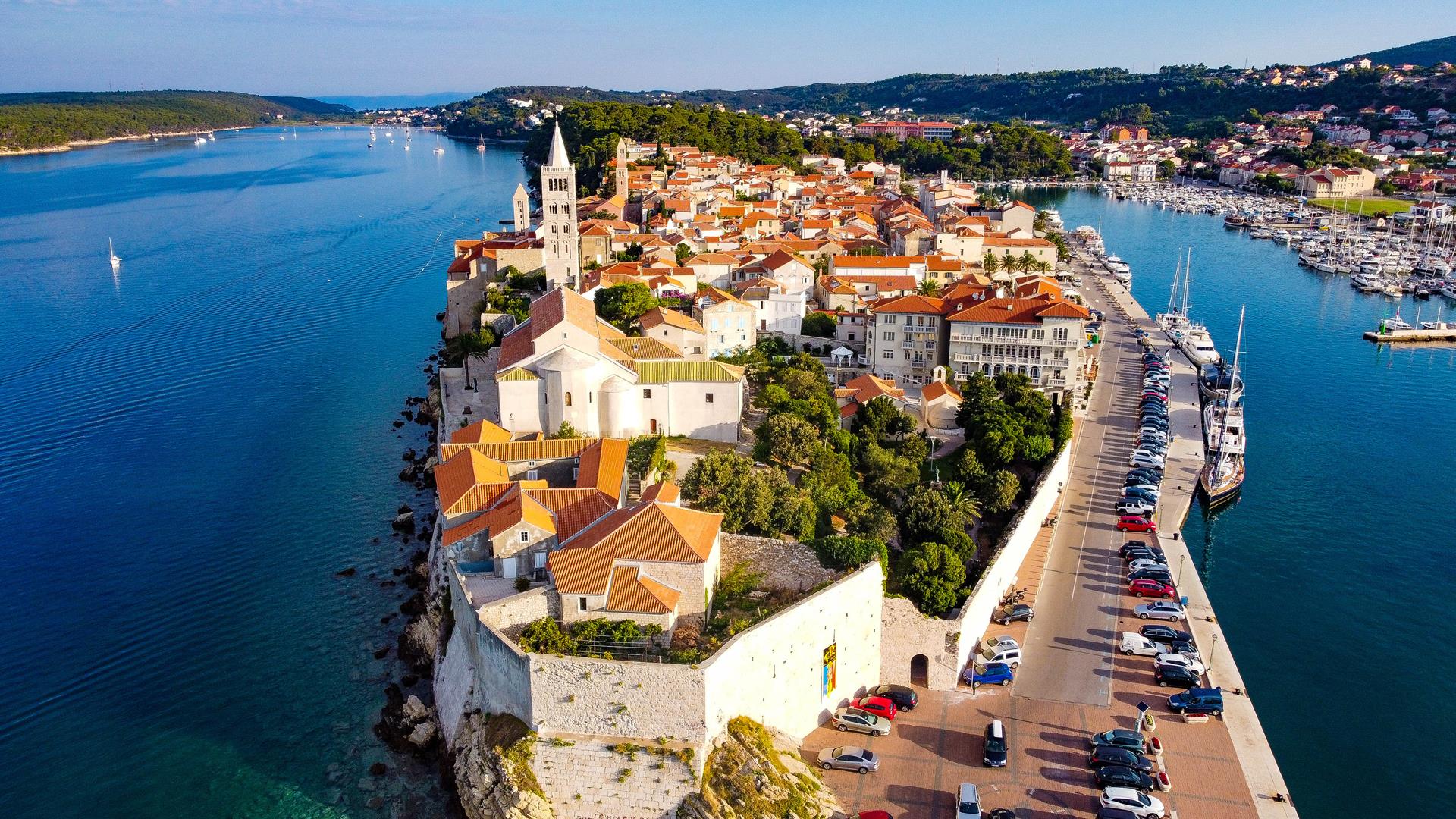
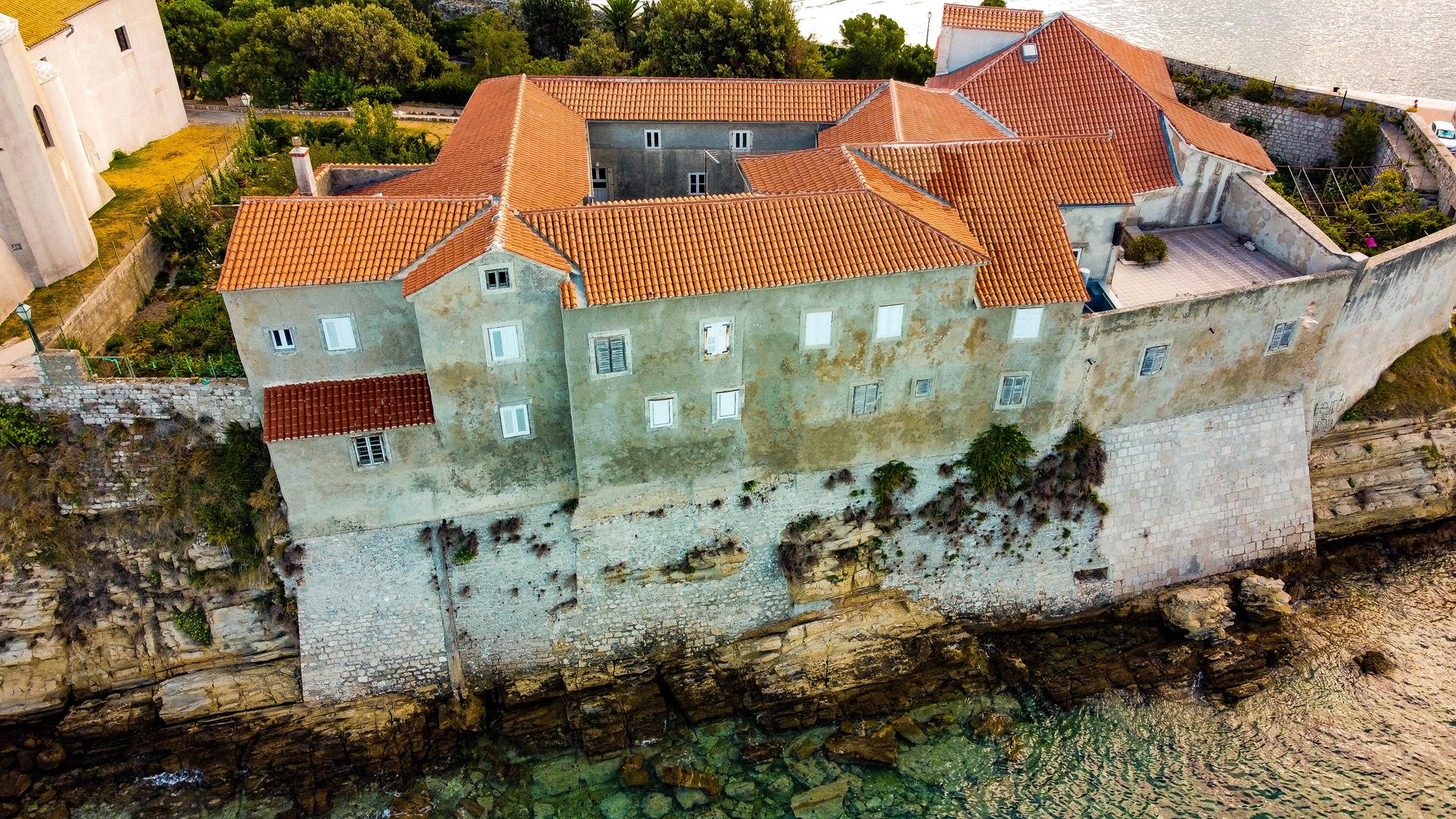
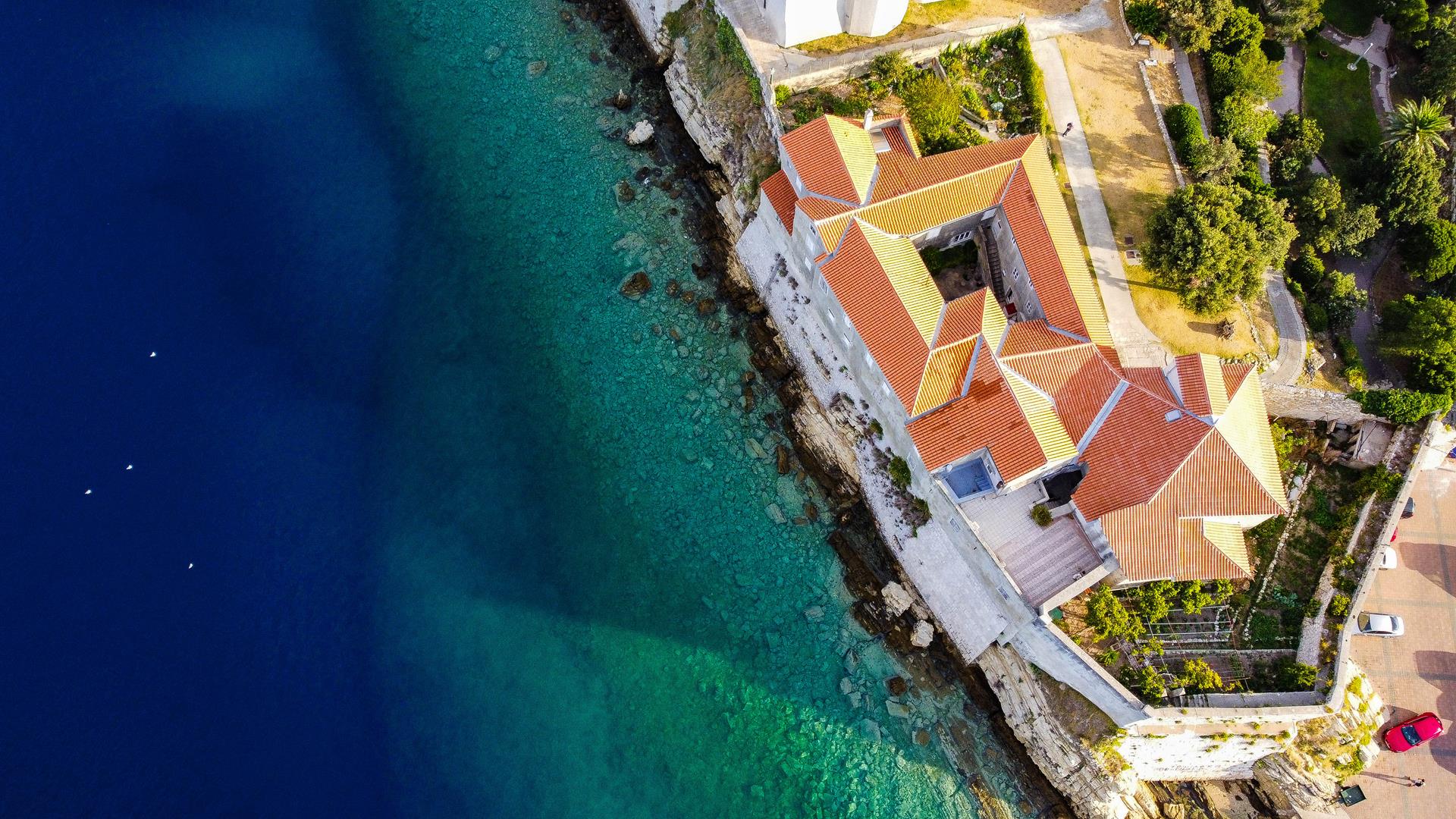
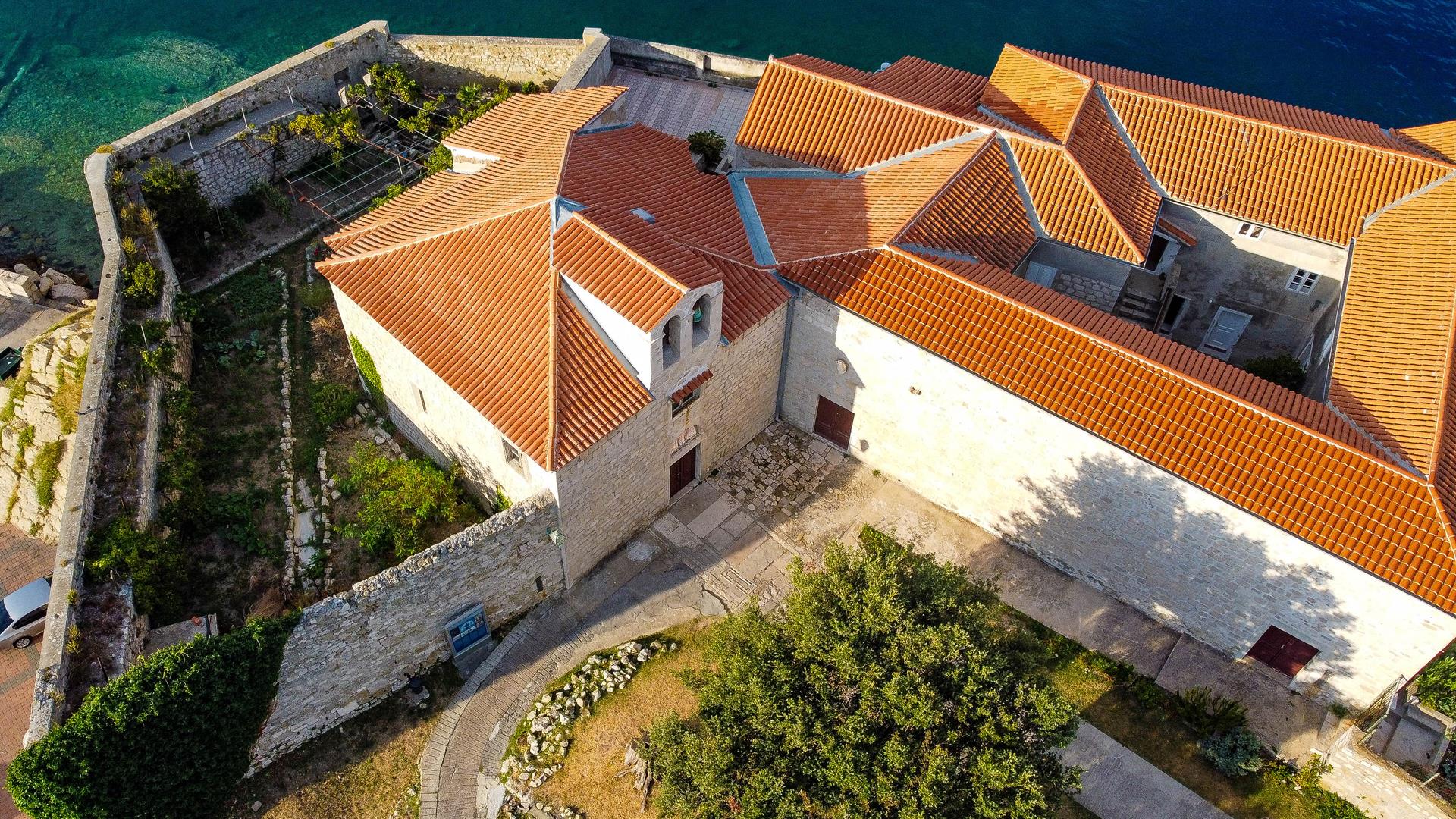
The monastery of the Franciscan Sisters of St. Anthony the Abbot is located in the oldest part of the Kladanac town centre, on the very top of the peninsula as part of the eastern and western city walls leaning against the cliff overlooking the sea. It was founded by the Duchess of Modruš Mande (Magdalena) Budrišić in1494 for Franciscan Sisters by the vow given following her escape from Lika, fleeing the Ottomans. The church belonging to the monastery is a single-nave church (8.5 x 8.5 m), erected in the 14th c. and is the oldest building within the monastery. A rectangular sanctuary with the cross-ribbed vault (septum) and the Gothic-style triumphal arch have been preserved to this day, belonging to the original church. In the 16th c., the eastern wall was fortified with a robust rectangular tower, the internal area of which served as a monastery garden until recently, while the monastery obtained the present-day appearance during the 19th century.
VALUABLE PIECES OF ART
Among artwork, you will find the wooden altar with a large painted sitting image of St. Anthony the Abbot inside the sanctuary, with lateral paintings on the wooden panel representing St. Tudor and St. Christopher (Kristofor). It is a piece of art produced by the Renaissance Venetian wood carvers dating back to the 2nd half of the 15th c. On lateral walls in the church nave there are Mannerism-style wooden altars with paintings, with the southern wall displaying the works pertaining to the early 17th c., featuring St. Joachim (Cro. Sv. Joakim) and St. Anna (Cro. Sv. Ana), produced by the painter Mateo Ponzoni. The southern wall of the sanctuary displays the painting representing Jesus Christ being taken down from the cross. It is a valuable piece of art of the Venetian Baroque style dating back to the end of the 17th c. Valuable artwork of the Gothic wood carving are kept at the monastery, as well as the unique panoramic photo of the town from the 17th c., transferred to the Church of St. Justine, where it is a Sacral Art Museum exhibit. The Croatian medieval Latin manuscript 'Žića svetih otaca' dating back to the 2nd half of the 14th c., considered the oldest manuscript of that type in Croatia was found in the monastery.
THE ARCHBISHOP OF BAR MARIN BIZZA – A BRAVE HUMANIST TRAVEL WRITER
Marin (Rab, approx. 1570 – Rome, 1625), the Bar Archbishop and a member of the old noble family from Rab, was buried i the church. In addition to several (4) tombstones of the families from Rab, his tombstone has also been preserved, dating back to 1625, the year he died. The Bar Archbishop Marin was a peculiar figure belonging to the Late Humanism. He was the writer of the extensive travel report from 1610 across Serbia, Montenegro and Albania, that is, the area of his diocese, that was under the Ottoman rule at that time, where he visited Roman Catholic worshippers. The report has become an important document in studying the history of the regions under the Ottoman rule. He received the permit for his travel from the Turkish Pasha Mahmud who originated from the Island of Rab.
JOHN THE BAPTIST FROM RAB (CRO. IVAN KRSTITELJ RABLJANIN) – THE GREATEST CROATIAN BRONZE FOUNDRYMAN
Among the remains of the buildings found under the Monastery of St. Anthony the Abbot (Cro. sv. Antun Opat), there was probably the workshop of the great artist, sculptor, technologist and bronze tools foundryman from Rab, John the Baptist from Rab (Cro. Ivan Krstitelj Rabljanin) (Iohanes Battista De Tole Arbensis, Rab, approx. 1470 - Dubrovnik, May 18th, 1540).